

Introduction: The Power of Mindful Travel in Shaping the Future
For many, traveling is a quest for new experiences, cultures, and landscapes. But what if every journey could go beyond personal enrichment and become a powerful tool for building a better future?
I firmly believe that tourism, when practiced conscientiously and responsibly, is a driver of transformation. That is why at Fauna Viagens, we passionately embrace the UN’s Sustainable Development Goals (SDGs), particularly SDG 11: sustainable cities and communities.
This article invites you to explore how your travel choices can align with a greater purpose, directly contributing to the creation of more inclusive, safe, resilient, and sustainable urban centers and human settlements.
Join us on this journey to understand how Fauna Viagens incorporates these principles into itineraries that not only enchant, but also leave a positive legacy for future generations.
SDG 11: A Closer Look at Sustainable Cities and Communities
The 17 Sustainable Development Goals (SDGs) represent a global call by the United Nations (UN) for governments, businesses, and individuals to join forces to protect our planet, eradicate poverty, and ensure peace and prosperity for all by 2030.
They serve as an ambitious roadmap for a future in which human progress and the health of the planet go hand in hand.
Within this framework, SDG 11—making cities and human settlements inclusive, safe, resilient, and sustainable—plays a central role. Cities are the major hubs of human activity: where the majority of the global population lives, works, and interacts. They are also epicenters of innovation, culture, and, unfortunately, environmental and social challenges. Preserving the vitality and sustainability of these “living organisms” is, therefore, an urgent and essential mission for the well-being of all humanity.
Tourism has a mixed impact on these goals. On the one hand, it can be a great ally:
- Economic stimulus and job creation: The influx of visitors injects capital into local economies, creating jobs and opportunities for small businesses.
- Infrastructure development: Tourism demand can drive investment in transportation, sanitation, housing, and basic services that benefit both tourists and residents.
- Cultural and heritage preservation: Visitors’ interest in historic sites and local traditions generates resources and incentives for their conservation, thereby safeguarding the cultural identity of cities.
- Urban regeneration: sustainable tourism projects can revitalize degraded areas, transforming them into attractive and functional spaces.
- However, unregulated tourism also poses significant challenges:
- Overtourism: An excess of visitors can overwhelm infrastructure, drive up prices (especially for housing), and dilute cultural authenticity.
- Environmental impact: increased pollution (air and waste), excessive consumption of resources, and pressure on urban ecosystems.
- Gentrification and cultural dilution: the transformation of traditional neighborhoods to cater to tourism can displace residents and homogenize the local culture.
- Social conflicts: The tension between the needs of tourists and those of residents can compromise the quality of life in the host community.
It is precisely in this complex landscape that Fauna Viagens’ approach stands out, transforming these challenges into opportunities for truly sustainable and meaningful tourism.
Fauna Viagens and the Heart of SDG 11: Turning Travelers into Agents of Change
I believe that every itinerary is an opportunity to make a positive impact. Our commitment to SDG 11 is not merely theoretical; it is woven into the fabric of every experience we offer, transforming each traveler into an active agent of change. I view tourism not as an end in itself, but as a powerful means of achieving more equitable and balanced urban development.
Learn how Fauna Viagens puts the principles of SDG 11 into practice:
1. Protection and promotion of historical heritage and cultural identity:
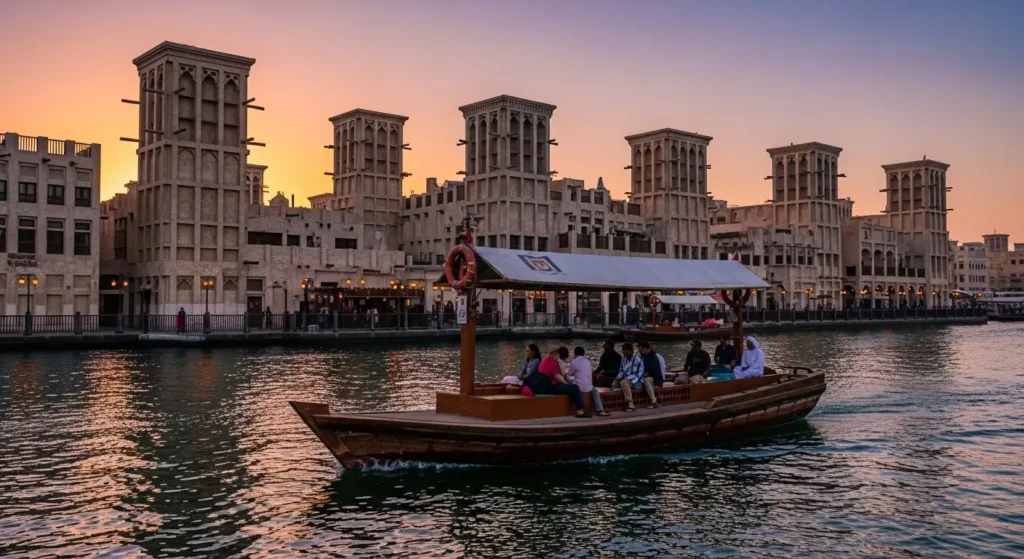
Our itineraries are carefully designed to highlight and protect the historical and cultural fabric of cities. In destinations like Dubai, we encourage exploration of historic districts such as Deira, where the preservation of traditional souks and the use of low-impact local transportation—such as the “abras” on the Creek—are not only authentic experiences but also acts that directly support the city’s identity. By exploring the vibrant souks, our travelers help safeguard ancient crafts and maintain the traditions that are the very soul of these places. It’s the difference between merely seeing a destination and truly experiencing its living history.
2. Sustainable mobility and reducing environmental impact:
We prioritize transportation that respects the environment and local dynamics. We encourage the use of traditional modes of transportation and guided walking tours whenever possible, rather than polluting vehicles. This approach not only minimizes our travelers’ carbon footprint but also offers a deeper immersion in the daily life of cities, allowing for discoveries that a tour bus could never provide. Cities like Copenhagen, with their exemplary bicycle infrastructure, are an inspiration for the kind of mobility I seek to promote.
3. Genuine support for the local economy and community empowerment:
One of the pillars of Fauna’s sustainable tourism is strengthening host communities. We connect our travelers directly with small-scale producers, artisans , and local families. One example we’re proud of is our support for the Palatéia community in Alagoas. By experiencing the daily lives of oyster farmers and the richness of the conservation areas in Barra de São Miguel, you ensure that the value of the trip stays directly with those who protect the land. This direct support fosters economic resilience and allows residents to preserve their way of life and traditions, safeguarding local culture from homogenization. It is tourism serving as a tool for social justice and local pride.
4. Low-impact tourism and mindful urban regeneration:
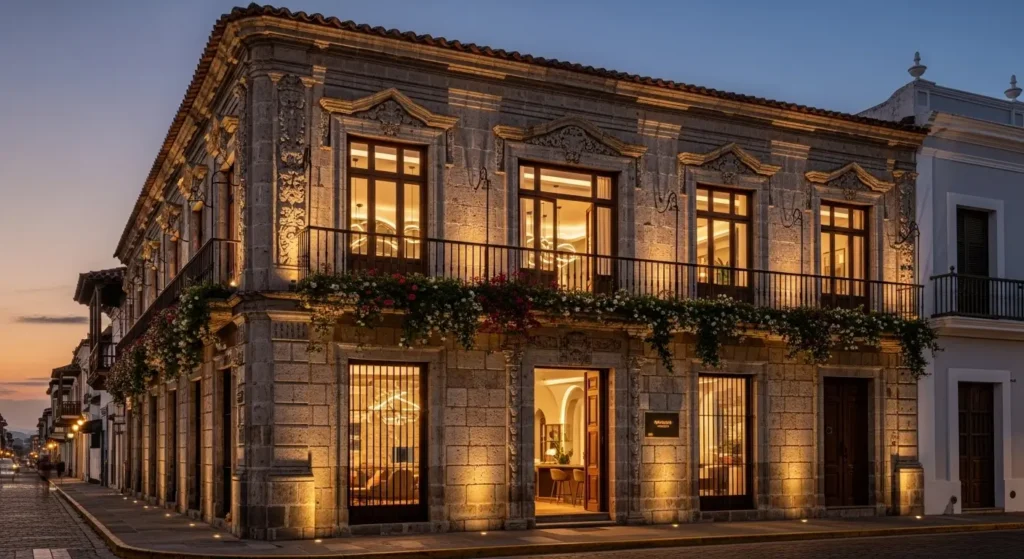
My selection of accommodations reflects our commitment to sustainability. We prioritize hotels that occupy and revitalize historic buildings, rather than supporting predatory new construction that can detract from the urban landscape or impact sensitive ecosystems. This practice contributes to the regeneration of urban areas, breathing new life into old structures and preserving local architecture, while offering a unique and character-filled lodging experience.
Beyond the Itinerary: Real-Life Examples of Cities Embracing SDG 11 Through Conscious Tourism
My vision at Fauna Viagens aligns with the work of cities around the world that are at the forefront of sustainable tourism, serving as inspiring models of how SDG 11 can be effectively implemented.
- Copenhagen, Denmark: Recognized globally for its ambition to become a carbon-neutral city by 2050, Copenhagen is a shining example of sustainable mobility. Its extensive cycling infrastructure, incentives for public transportation, and programs that reward eco-friendly behavior among tourists (such as “CopenPay”) demonstrate how a city can integrate sustainability into its urban and tourism DNA.
- Amsterdam, the Netherlands, and Barcelona, Spain: These cities have been tackling the challenges of overtourism with innovative strategies. They spread visitors out geographically by promoting lesser-known neighborhoods and use real-time monitoring technologies to manage tourist flows. In addition, they actively involve the local community in tourism planning, ensuring that residents’ needs are prioritized and that tourism contributes to a better quality of life for everyone.
- Florence, Italy, and Seoul, South Korea: By focusing on visitor education and regulating access to sensitive areas, these cities demonstrate how it is possible to protect their heritage and local way of life. In Seoul, for example, access to traditional villages is restricted during certain hours to preserve the residents’ peace and quiet.
These examples underscore that urban sustainability in tourism is not just an idea, but a multifaceted reality that requires careful planning, community engagement, and the active participation of companies like Fauna Viagens—and, of course, the travelers themselves.
Your Impact: How to Choose Trips That Leave a Positive Legacy
With every travel decision, you have the power to make a tangible difference. By choosing itineraries aligned with SDG 11 and Fauna Viagens’ philosophy, you’re not just enjoying an experience; you’re investing in a more equitable and sustainable future.
Its positive impact is reflected in:
- Richer, more authentic experiences: By connecting with the local culture and supporting the community’s economy, your travels become more meaningful and memorable, far from the typical tourist routes.
- Cultural and environmental preservation: You contribute directly to the preservation of historical heritage, traditions, and urban ecosystems, ensuring that these treasures remain for future generations.
- Community empowerment: Your investment translates into job opportunities, local development, and the preservation of the identity of communities that benefit directly from responsible tourism.
- A better quality of life for residents: By choosing low-impact practices and respecting local communities, you help mitigate the negative effects of tourism, contributing to cities that are more pleasant for those who live there.
Conclusion: Your Next Adventure, a Legacy for the Future
SDG 11 reminds us that our cities are more than just clusters of buildings: they are homes, centers of culture, and engines of progress. My unwavering commitment at Fauna Viagens is to sustainable tourism, bridging the desire to explore the world with the responsibility to protect it.
Ready to be an agent of change? Explore Fauna Viagens’ sustainable itineraries and make your next adventure a priceless legacy for the cities and communities you have the privilege of visiting. Your trip can and should transform the world, one mindful experience at a time.