
When we think of South Africa, it’s only natural that safaris are among the first things that come to mind. And it’s no coincidence: the country is home to some of the continent’s most important wildlife reserves. But what not everyone knows is that the experience goes far beyond simply seeing animals—especially in places like the Madikwe Game Reserve, which offers not only encounters with the Big Five, but also a model of tourism that prioritizes conservation, environmental regeneration, and real social impact.
Why did I choose Madikwe (and not Kruger)?
I traveled with my young daughter and was looking for a malaria-free destination that took a more child-friendly approach to travelers with children. In addition, I wanted our experience to be not just about observing—but also about understanding the role of tourism in transforming regions and communities. And that’s exactly what I found in Madikwe.
See also: Is it worth visiting South Africa with children?
Located on the border with Botswana, the reserve spans more than 75,000 hectares and is now a model of success in sustainable tourism. The area was previously used for agriculture and livestock farming, but it was restored and transformed into an ecotourism hub after a study showed that this change would bring more jobs and income to the local population. Today, Madikwe is home to dozens of wildlife species, including lions, leopards, elephants, rhinos, and buffalo.
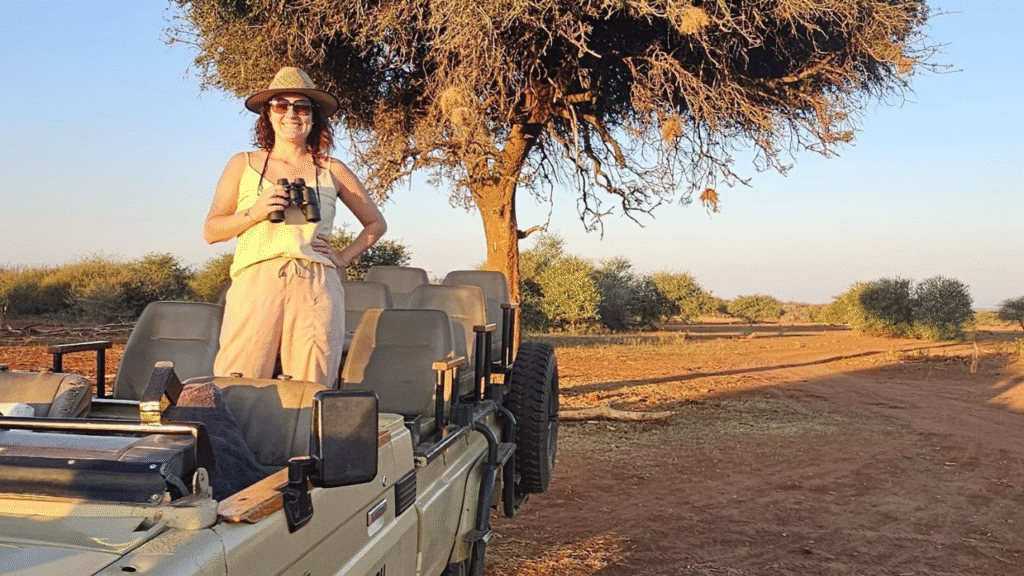
Thakadu River Camp: A Purpose-Driven Lodging Experience
I chose to stay at Thakadu River Camp, a lodge operated entirely by the local community of Molatedi Village. This means that, in addition to creating jobs, the lodge operates under a management model that is unique in South Africa: the residents have a contract to develop the area for tourism, with profits reinvested directly into their own projects.
The lodge’s staff come from the local community, and if they don’t, they undergo a local immersion program before starting work. Hospitality there isn’t just about service—it’s a cultural expression and a legacy.
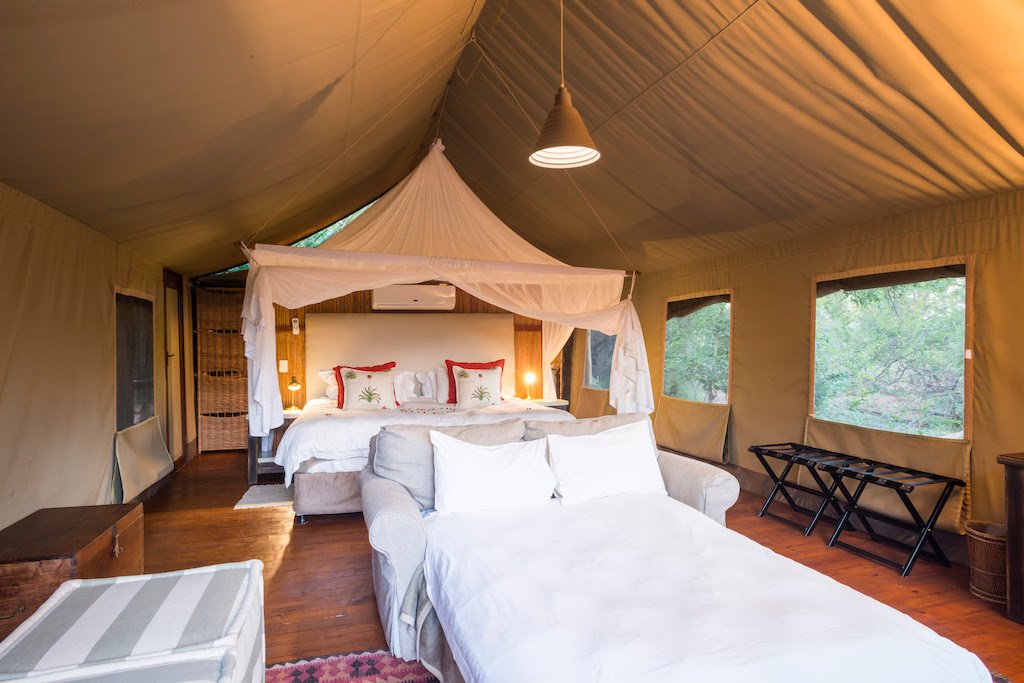
The tent-style suites offer comfort and a connection to nature: each one has a deck overlooking the Marico River. The lodge also features a pool, lounge, restaurant, and all-inclusive experiences that include guided safaris at dawn and dusk, meals, and moments of contemplation.
What I experienced there
Even though I went on only three safaris (out of a possible five), the experience was absolutely unforgettable. I’ve listed some of the moments that still linger in my memory:
- I watched an elephant eat while I was relaxing by the pool.
- I had a massage on the porch of my tent, surrounded by curious little monkeys.
- I slept deeply and was awakened by the pulsing sounds of nature.
- I witnessed the most beautiful sunrise of my life.
- I saw a lioness less than 20 meters away, completely at peace.
- I watched a clumsy baby elephant trying to drink water.
- I was moved by a night sky studded with stars like I'd never seen before.
A safari is just the beginning
Many people still think of a safari as a “photo tour.” But in places like Madikwe, it becomes a lesson in ecology, empathy, and regeneration. You can get to know African wildlife in its natural habitat without intruding, without disturbing it… simply by coexisting with it.
See also: What South Africa Taught Me About History, Beauty, and Hospitality
For those seeking experiences with soul, purpose, and comfort, this is one of the most transformative ways to explore South Africa. Because seeing a lion is exciting, yes. But understanding how that land has been restored with respect for nature and people… that’s what truly transforms you.