
Fez, the ancestral soul of Morocco
There are places we visit, and there are places that transform us. Fez belongs to the second category. Stepping inside its clay walls is not just a physical journey, but a journey through time. Here, the ancestral soul of Morocco reveals itself in its purest form, where the frenetic pace of the modern world gives way to the sound of artisans’ hammers, the call to prayer, and the silence that fills hidden courtyards.
Founded in the 8th century, Fez was an imperial capital, the birthplace of one of the world’s oldest universities, and remains the beating heart of the country’s culture and spirituality. For Fauna, traveling to Fez is more than just a tourist itinerary; it’s a deep immersion, an opportunity to reconnect with ancient wisdom and learn to slow down again. It’s a destination for those who travel not just to see, but to feel and understand.
Planning Your Trip to Fez
Planning a trip to such a unique place requires a balance of practicality and poetry. Fauna helps you take care of every detail.
Where Is Fez, and How Do You Get There?
Nestled between the Atlas Mountains and the fertile plains of northern Morocco, Fez grew up along the banks of the river that bears its name.
- By plane: Fez–Saïss Airport (FEZ) receives direct flights from several European cities and has good domestic connections, making it the most convenient gateway.
- By train: For those already in Morocco, the ONCF rail network connects Fez to cities such as Marrakesh, Casablanca, and Rabat on a scenic and comfortable journey.
Best Time to Visit
The Mediterranean climate sets the pace of the city. The best times to visit are spring (April through June) and fall (September through November), when temperatures are mild and the golden sunlight bathes the city walls in magical hues. Summers can be intense, with temperatures above 35°C, while winters are colder and wetter.
How Long to Stay
Fez is not a city to be seen in a hurry.
- Minimum: 2 full days are enough to see the main sights.
- Ideal Fauna: We recommend 3 to 4 nights for a truly immersive experience. This amount of time allows you to lose yourself (and find yourself) in the narrow streets of the Medina, enjoy a leisurely cup of tea, take part in a craft workshop, and let the city’s rhythm guide you.
Where to Stay in Fez: The Fauna Selection
Accommodations in Fez are an integral part of the experience. Our curation focuses on places that offer more than just a bed—they serve as a gateway to the local culture.
- The riad experience: staying in a riad (a traditional house with an inner courtyard) in the Medina (Fez el-Bali) is our top recommendation. They are oases of tranquility and beauty that reveal their charms only once the door opens. For an authentic experience, consider riads that preserve the local architecture and hospitality.
- Other options: For those looking for a more residential atmosphere, Fez el-Jdid offers proximity to gardens and city walls. The Ville Nouvelle, on the other hand—the modern part of the city—is home to international hotel chains and cafés with a more cosmopolitan vibe.
Travel Insurance
For a worry-free trip, it’s essential to purchase good travel insurance. It provides assistance in the event of medical emergencies, lost luggage, and other unforeseen circumstances, allowing you to focus solely on enjoying your trip.
Essential Practical Information
- Currency: Moroccan dirham (MAD). It's helpful to have cash on hand for small purchases in the souks.
- Languages: Arabic and Berber are the official languages. French is widely spoken in commerce and tourism.
- Voltage and outlets: 220V, with Type C and E outlets (European standard).
- Customs: Dress respectfully, especially when visiting religious sites (shoulders and knees should be covered). Ask for permission before taking photos of people.
The Living History of Fez
Every stone in Fez tells a story. Founded in the 8th century by the Idrissid dynasty, the city quickly became a beacon of civilization. It was during the splendor of the Merinid and Saadian dynasties, between the 13th and 15th centuries, that Fez reached its zenith, establishing itself as a center of power, art, and knowledge.
This is where Al-Qarawiyyin University was founded in 859 by a woman, Fatima al-Fihri, and is recognized as the oldest continuously operating university in the world. For centuries, its courtyards served as the epicenter of Islamic scholarship, attracting scholars from around the world.
Even during the French Protectorate in the 20th century, Fez held its ground, preserving its cultural identity and its urban labyrinth. This effort was recognized in 1981, when UNESCO designated its medina, Fez el-Bali, as a World Heritage Site—a living treasure to be protected.
Things to Do in Fez
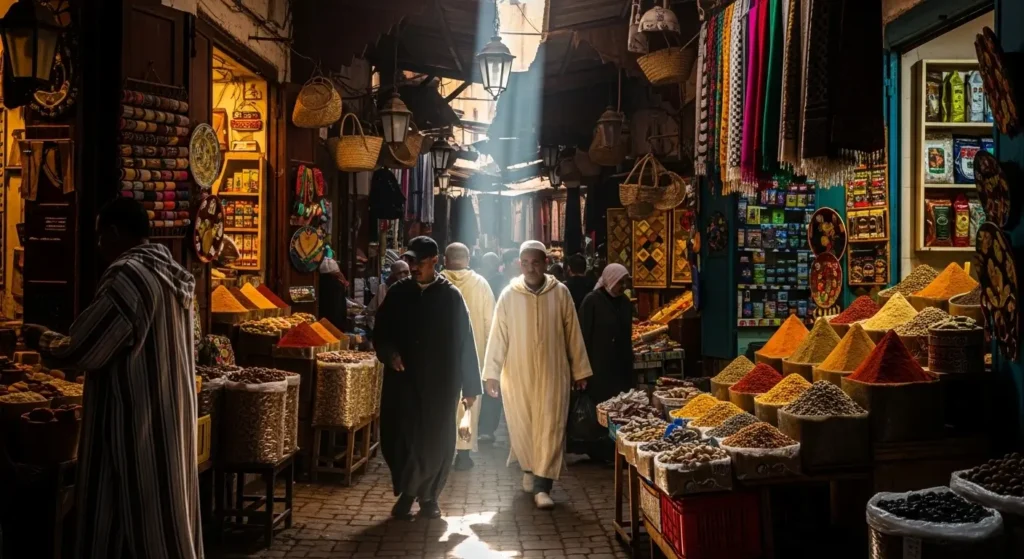
Get ready for a sensory experience.
- Explore the Medina of Fez el-Bali: with more than 9,000 streets and alleys, this is the largest car-free urban area in the world. The best tip? Put away your map and get lost. It’s when you stray from the main path that you’ll find a hidden workshop, a quiet square, or the smile of a local.
- Visit the Chouara tanneries: one of Fez’s most iconic sights. From the terraces of the leather shops, you’ll have a panoramic view of the colorful dye vats—a method that has remained virtually unchanged for centuries. The smell is strong, but the scene is unforgettable.
- Passing through the Blue Gate (Bab Bou Jeloud): This imposing gate, with blue mosaics on the outside and green mosaics on the inside, is the main entrance to the medina and the landmark that separates the old city from the new.
- Discover the Koranic Schools (Madrasas): they are architectural gems of the Merinid era. The**Bou Inania Madrasa** and the**Al-Attarine Madrasa** are stunning examples, with their marble courtyards, carved stucco walls, and cedar wood details.
- Admire the Royal Palace (Dar el-Makhzen): although you can’t go inside, its seven massive gilded bronze gates alone make the visit worthwhile. Each gate represents a day of the week and the splendor of royal power.
- Strolling through the Jewish Quarter (Mellah): With its distinctive architecture, wrought-iron balconies, and synagogues, the Mellah tells the story of the vibrant Jewish community that once flourished in Fez.
- Discovering Museums and Gardens: The Nejjarine Museum of Wooden Art and Crafts, housed in a former caravanserai, is spectacular. For a break from the hustle and bustle, the Jnan Sbil Garden offers a peaceful retreat with its fountains and bamboo groves.
Fauna Experiences: Immersion, Culture, and Sustainability
We believe that traveling is about building connections. So, to truly connect with the essence of Fez, consider the following experiences:
- Fassi Cooking Classes: How about learning the secrets of an authentic tagine? You can find classes in riads and at local families’ homes, where the experience ranges from shopping for ingredients at the souk to sharing the meal.
- Craft workshops: Get an up-close look at the work of a maalem (master artisan). You can arrange visits to pottery, leather, or metal workshops, where you can not only observe but also get your hands dirty and gain a deeper understanding of these ancestral traditions.
- Community support: Traveling responsibly is essential. We encourage you to seek out women’s cooperatives and social projects, such as the Medina Children’s Library, a community library that does incredible work and accepts donations.
- Tea with the Locals: Moroccan hospitality is legendary and is embodied in the mint tea ritual. Consider seeking out opportunities to be welcomed into a local home for a genuine exchange that goes far beyond tourism.
Suggested itineraries to make the most of your visit
- 1-Day Itinerary in Fez (the essentials): Start at the Blue Gate (Bab Bou Jeloud), walk along the main street, Talaa Kebira, visit the Bou Inania Madrasa, continue on to Al Quaraouiyine University (exterior view), and end the day at the Chouara Tannery.
- 2- to 3-day itinerary (full immersion): On the first day, follow the essential itinerary. On the second day, explore the Mellah, the Royal Palace, and the Jnan Sbil Garden. Spend the afternoon at a crafts workshop. On the third day, venture into the lesser-known alleys of the medina, visit the Nejjarine Museum, and finish with a cooking class.
Culture and Daily Life: The Soul of Fez
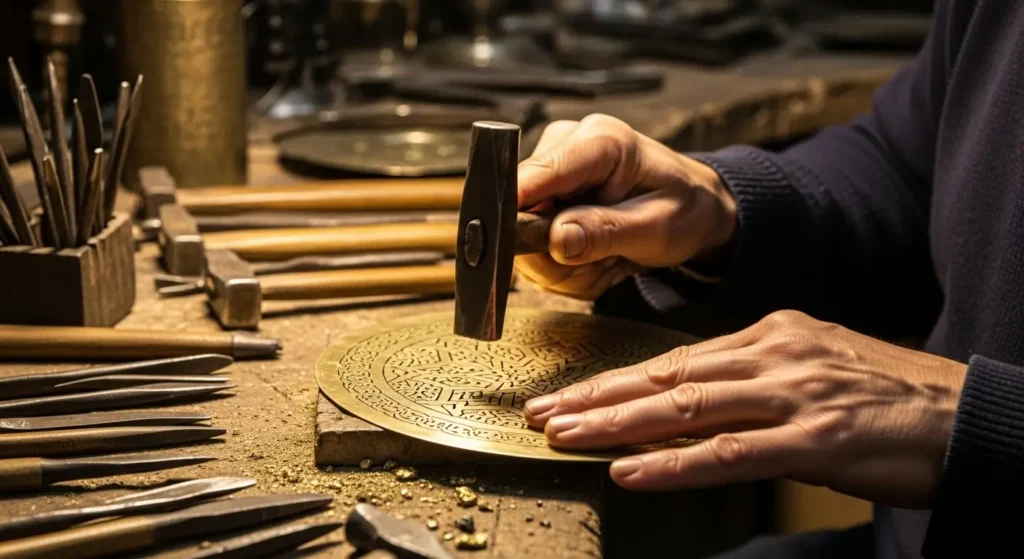
The true spirit of Fez lies not in its monuments, but in the life that pulses around them. It is the sound of the maalems at work echoing through the workshops, the smoke from the communal bread ovens, and the children running through the alleys. The five daily calls to prayer structure the day and fill the air with an atmosphere of devotion.
Hospitality is a cornerstone. Accepting a glass of mint tea is accepting a connection. Bargaining in the souk isn’t just about prices—it’s a social dance, an art that’s learned with patience and good humor.
Fassi Cuisine: The Flavors of Fez
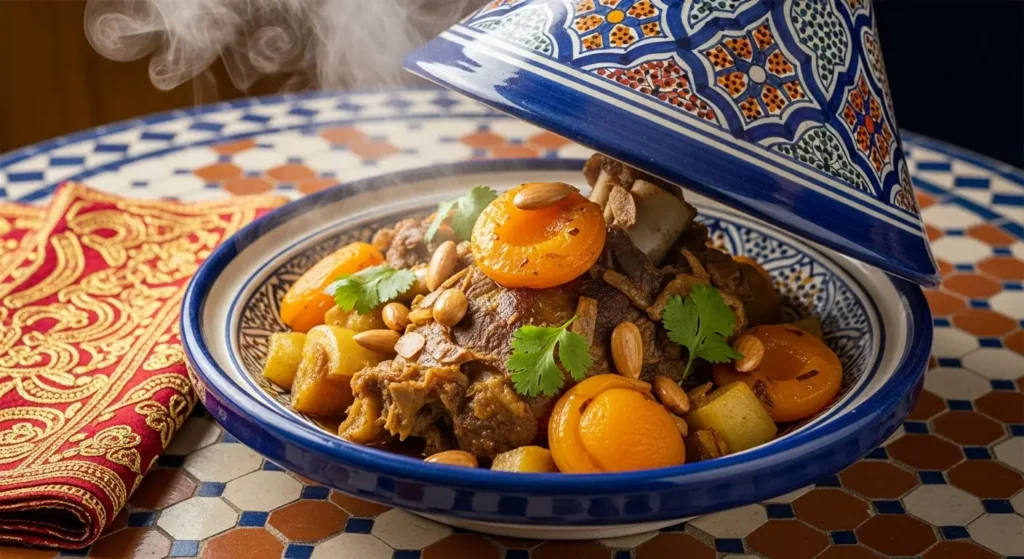
Considered the most refined in Morocco, the cuisine of Fez is a feast for the senses, blending Arab, Berber, and Andalusian influences.
- Dishes you have to try:
- Pastilla: a sweet-and-sour puff pastry pie, traditionally made with pigeon meat and almonds.
- Dried-fruit tajine: slowly simmered in a clay pot, combining lamb or chicken with apricots, plums, and spices.
- Fassi Couscous: the local version of this famous dish, often served with seven vegetables or in a sweet version with cinnamon and raisins.
- Where to Eat in Fez: Suggestions: For an authentic dining experience, consider restaurants that highlight local ingredients and traditional recipes. Suggestions range from sophisticated options in elegant riads, such as Dar Roumana and La Maison Bleue, to authentic, family-run establishments like Dar Hatim, and spots with a modern cultural twist, such as Café Clock.
Beyond the walls: sightseeing and the surrounding area
- Meknes and Volubilis: a perfect day trip. Explore Meknes, another imperial city, and then travel back in time at the impressive Roman ruins of Volubilis.
- Ifrane: Nicknamed “the Moroccan Switzerland,” this city in the Atlas Mountains offers a completely different landscape, with its gabled roofs and well-maintained parks.
- Chefchaouen: The famous Blue City is a dream destination for many travelers. You can visit it from Fez, but the trip is long (about 4 hours each way). Ideally, you should spend the night there to enjoy the city at a leisurely pace, but a fast-paced day trip is feasible for the most determined travelers.
Fauna Essence: Conclusion
Fez is a destination that challenges and rewards us in equal measure. It teaches us that beauty lies in imperfection, that history is alive, and that the best way to get to know a place is to allow yourself to slow down. It is a city that embodies the philosophy of Fauna Viagens: to travel in order to connect, learn, and return transformed.
Here, time stands still, craftsmanship endures, and silence teaches. Fez is not just to be seen, but to be experienced with all the senses.
Would you like to learn more about our consulting services and customized itineraries for Fez? Please contact us.