

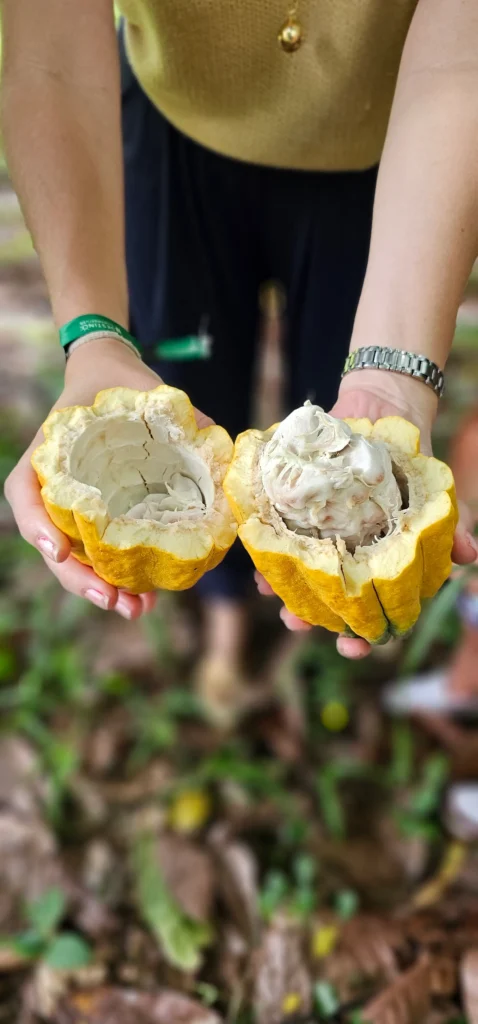
The Chocolate Trail, in southern Bahia, has just earned recognition that goes beyond awards or certifications: it has been included on the Brazilian Map of Responsible Tourism, in the Sustainability category. This recognition attests to the fact that a tourist itinerary can—and should—balance experience, culture, and care for the local environment.
An itinerary that takes its inspiration from the region
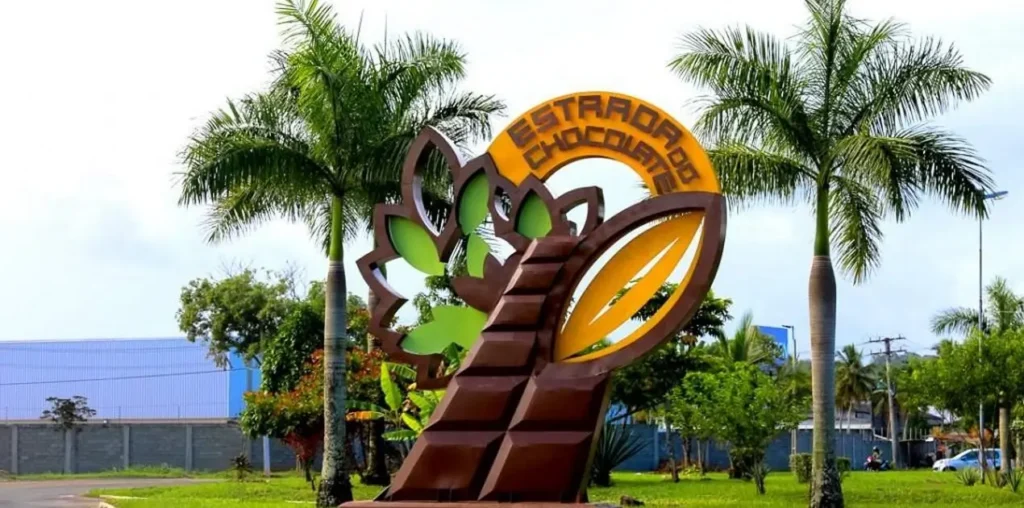
Between the municipalities of Ilhéus and Uruçuca, on the so-called Cocoa Coast, the Chocolate Road is much more than just a path connecting farms. It is an invitation to understand, experience, and participate in Bahia’s cocoa culture.
Along this route, visitors are immersed in lush landscapes, agricultural history, and traditions that range from planting seeds to producing fine chocolates. It is an experience that resonates beyond flavor: it connects ecology, the local economy, and cultural identity.
Sustainability as a Core Experience
The Brazilian Map of Responsible Tourism is part of the Ministry of Tourism’s “Brasil, essa é a nossa praia” project, and the destinations are not chosen at random. The criteria go beyond natural attractions: they assess how tourism can promote inclusion, local development, and the preservation of environmental and cultural heritage.
Farms, Stories, and Flavors
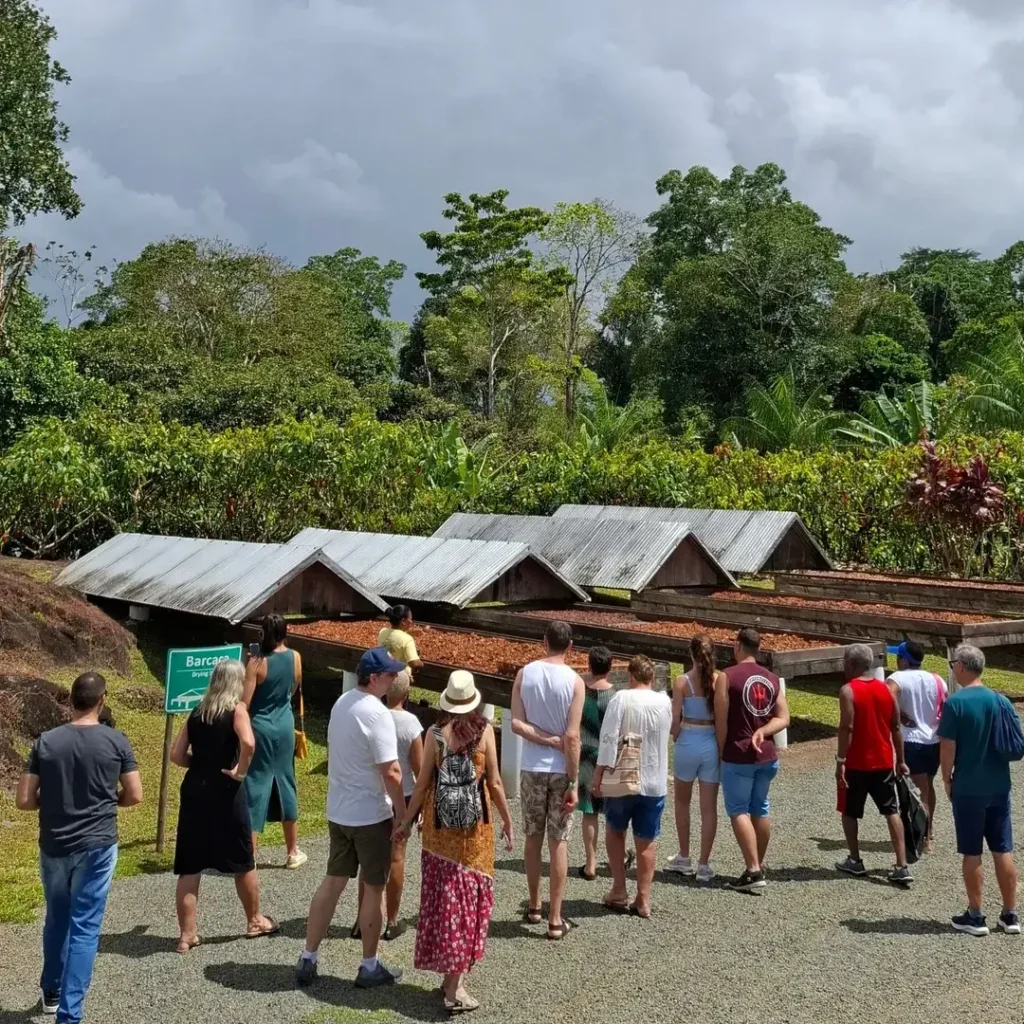
Along the Chocolate Trail, travelers will find cacao farms that are veritable living museums of chocolate production: from the germination of the seed to the tasting of artisanal and fine chocolates.
Some notable experiences include:
- walks through the plantations, with explanations about the history of cacao in the region;
- guided tours of the harvesting and preparation processes;
- tasting experiences that connect taste, memory, and place.
Alice Saad says she traveled along the Chocolate Route during her visit to southern Bahia and had the opportunity to experience it firsthand while visiting Fazenda Bom Jesus in Una (BA), a producer of organic cacao and one of Dengo’s main suppliers. The tour was guided and took place during her stay at the Transamérica Comandatuba.
“Walking through the Atlantic Forest, tasting fresh cacao, trying ice-cold cacao honey, and understanding all the care involved in the chocolate production process completely changed my perception of the region and this production chain,” says Alice, adding: “It’s an experience that connects nature, local knowledge, and time. An experience I recommend to everyone and that can be enjoyed in different ways, including on bike tours.”
When a tour is recognized as a benchmark in sustainable tourism, it also serves as a reminder that tourism can be inclusive, generating income and opportunities for local communities; conservation-oriented, by protecting biodiversity and natural resources; culturally rich, by valuing stories and traditional knowledge; and territorially ethical, by respecting those who live and work in that place.
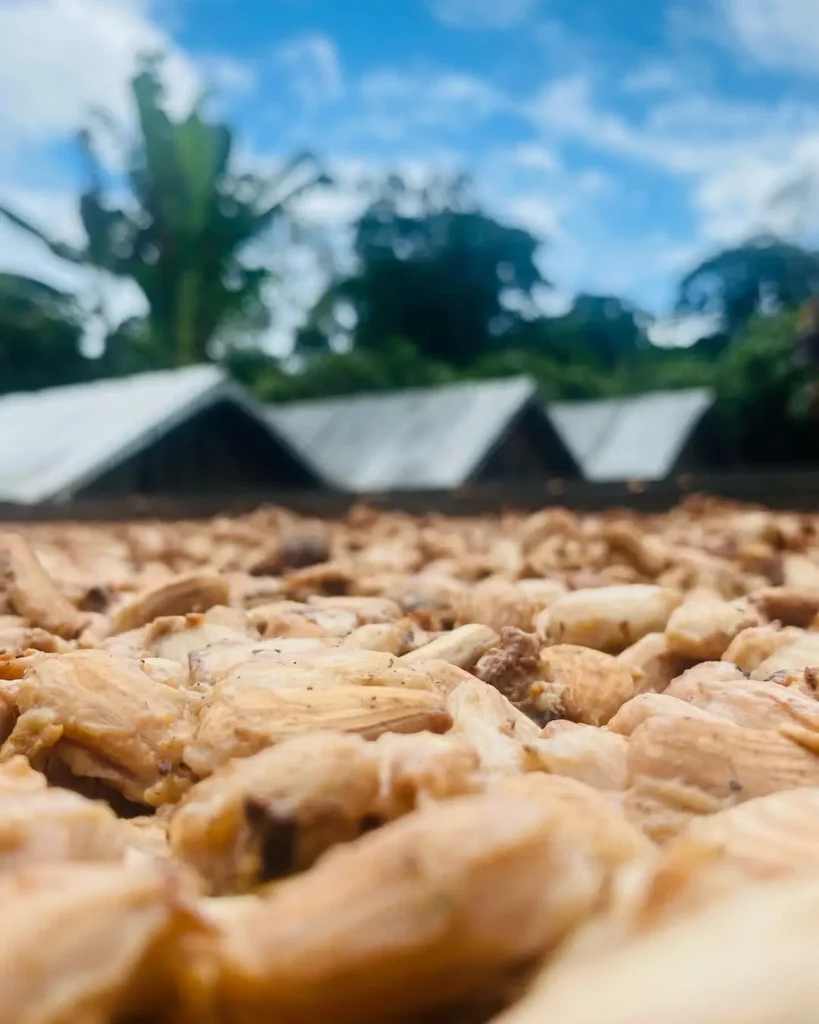
The Chocolate Trail stands as a living example of this path. It is an invitation to rethink the impact our footsteps have on the landscape and on the lives we encounter along the way. At a time when so many initiatives seek to balance development and conservation, this itinerary shows that it is possible to grow without losing one’s identity, and to welcome visitors without exploiting them.
Sustainable tourism isn’t just a concept. It’s a practice, an experience, and time spent with the place and the people who bring it to life. The Chocolate Trail teaches us that traveling can mean learning from those who live there, savoring history where it unfolds, and creating memories that respect nature and local cultures. When done mindfully, even the simple act of walking along a cacao trail can become a profound way to discover the world—and ourselves.